Material Engineering & Structural Truth
Tapered Jaw Geometry & Blade Centering
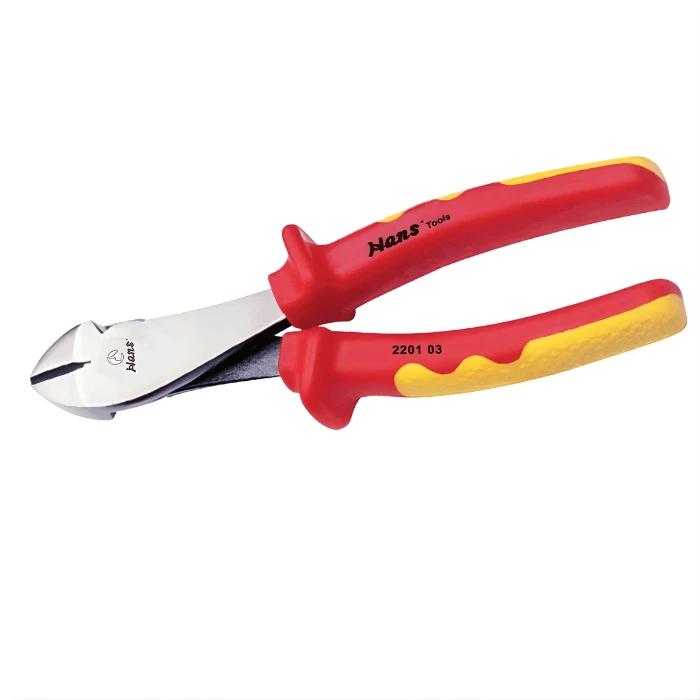
The cutting head of the 1859 is engineered with a clean, low-profile taper. This geometry allows the cutter to slide flush against terminal block dividers and behind circuit rails to snip wire ends clean without nicking nearby line insulation. The cutting edges are precision-aligned using a zero-clearance lap joint to prevent materials from pulling or tearing rather than cleanly shearing.
High-Frequency Induction Hardened Cutting Jaws
Cutting copper conductors puts repetitive stress localized on the blade edges. To ensure a long service life, the 1859 cutting blades are treated with localized high-frequency induction hardening. This creates a highly resilient crystalline matrix along the edge track, preventing edge deformation, denting, or dulling even when tackling hard-drawn copper wire leads.
IEC 60900 Dual-Component Handle Insulation
The dual-material grips are injected directly over the alloy steel core. The heavy-walled outer layer provides excellent wear protection and chemical resistance, while integrated high-profile safety finger flanges form an absolute physical barrier to prevent the user’s fingers from sliding forward onto conductive steel surfaces.
Technical FAQ: 1859 Side Cutter Optimization
Q: When should an electrician use the 1859 Diagonal Nipper instead of the 1860 high-leverage side cutter model?
A: When accessibility, clear sightlines, and agile hand handling take priority over heavy shearing torque. The Hans 1860 is a heavy-duty tool built for thick, multi-core cables and hard iron wire line pulls, featuring a thick, heavy joint. The Hans 1859 is lighter and more agile, making it the ideal choice for everyday wire-panel routing, light terminal work, and clean component clipping in tight spaces where heavy handles would feel clumsy.
Q: What routine habits protect the cutting edges of a premium diagonal nipper over years of service?
A: Avoid using the blades to pry at stuck pins, and never use them to cut hardened nails or steel springs. The induction-hardened blades are ground to cleanly cut copper wire, soft iron leads, and plastic zip ties. Forcing a precision nipper onto high-tensile spring steel will nick the cutting path. To maintain smooth action, place a single drop of clean machine lubricant onto the lap joint rivet point periodically.