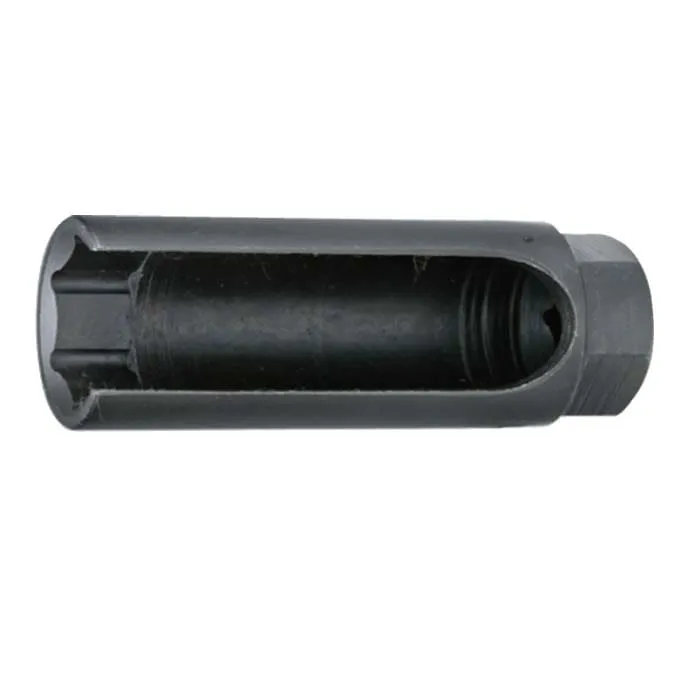
3351-OS22 / 4351-OS22 Offset Oxygen Sensor Socket | ⅜” & ½” Dr. | 22mm

3351-OS22/ 4351-OS22 ⅜” ½” Drive Offset Oxygen Sensor Socket
  • Douille décalée pour sonde à oxygène
  • Nasadka odgięta do sondy lambda
  • Versetzte Lambda-Sonden-Stecknuss
  • Vaso desplazado para sensor de oxígeno
  • ソケット حساس الأوكسجين الجانبي
  • 偏移式氧氣感知器套筒
  • บล็อกถอดเซ็นเซอร์ออกซิเจนแบบเยื้องศูนย์
  • Soquete deslocado para sensor de oxigênio
  • Eltolt oxigénszenzor dugókulcs
  • Cheie tubulară offset pentru senzor de oxigen
  •  Bussola offset per sensore ossigeno
  • Offset dopsleutel voor lambdasensor
  • Смещённая головка для датчика кислорода
  • Offset tipi oksijen sensörü lokması
  • Auto Tools/ Specialty

3351-OS22 and 4351-OS22 are specialized automotive MRO tools engineered for the removal and installation of oxygen (O2) sensors in modern exhaust systems. Designed with a low-profile offset architecture, these sockets allow for high-torque leverage in restricted engine bays where standard sockets cannot fit. Following the Hans 4-digit manual SKU logic, these items are forged from premium Chrome Vanadium (Cr.V) Steel, providing the structural rigidity required to break loose heat-seized sensors without deforming the tool.

ItemLength
(mm)
porduct sizeicon1
g
porduct sizeicon2
pcs
3351-OS22 3⁄8" (M22)9019512
4351-OS22 ½" (M22)9019512

Feature

Technical Architecture & Mechanical Logic

  • Dual Drive Availability (3/8″ & 1/2″):
    • 3351-OS22: Features a 3/8″ Square Drive for compact clearance and precision handling.
    • 4351-OS22: Features a 1/2″ Square Drive for maximum leverage on heavily corroded or seized sensors.
  • Side-Slotted Geometry: The socket features a precision-machined vertical slot that allows the O2 sensor wire to pass through during operation. This eliminates the need to disconnect or damage the sensor’s delicate wiring harness.
  • Offset “Crowfoot” Design: The drive input is offset from the socket center. This lowers the tool’s vertical profile, allowing a ratchet handle or breaker bar to operate parallel to the exhaust pipe in tight heat-shield environments.
  • 6-Point (Hex) Zero-Tolerance Fit: The 22mm internal hex is machined to ensure maximum surface contact with the sensor body, preventing the “rounding” of expensive components under high-torque manual operation.
  • Industrial Cr.V Construction: Forged for high-cycle workshop use, the Chrome Vanadium body maintains its shape under extreme pressure, far outperforming cast-metal alternatives.

B2B Procurement & Workshop ROI

  • Versatile Fleet Coverage: The 22mm size is the global standard for the majority of oxygen sensors on domestic and import vehicles.
  • Damage Prevention: The rigid side-slot design prevents “spreading” of the socket walls under load, a common failure in low-quality tools that leads to sensor damage and increased labor time.
  • Standardized Tooling: These 4-digit manual series tools are essential additions to a professional automotive tool trolley, providing a dedicated solution for a high-frequency service task.

FAQ Section

What is the difference between 3351-OS22 and 4351-OS22? The only difference is the drive size. The 3351-OS22 uses a 3/8″ drive ratchet handle, which is better for tight spaces. The 4351-OS22 uses a 1/2″ drive, allowing you to use larger breaker bars for sensors that are completely seized or rusted in place.

Why is an offset design better than a standard deep socket? Oxygen sensors are often located in very narrow gaps between the exhaust and the car body. A standard deep socket is too tall to fit. The offset oxygen sensor socket moves the handle to the side, giving you the clearance you need while still providing a secure 6-point grip on the sensor.

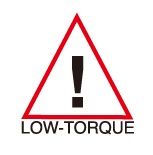
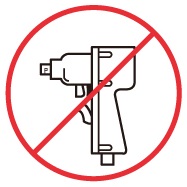
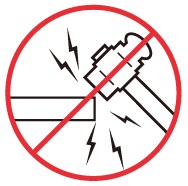
Can I use a screwdriver bit or an impact wrench with this? No. These are 4-digit manual series tools made of Cr.V. They are designed to be used with a manual ratchet handle or breaker bar. Using an impact wrench may damage the socket or the delicate ceramic internal components of the oxygen sensor.

RELATED PRODUCTS